
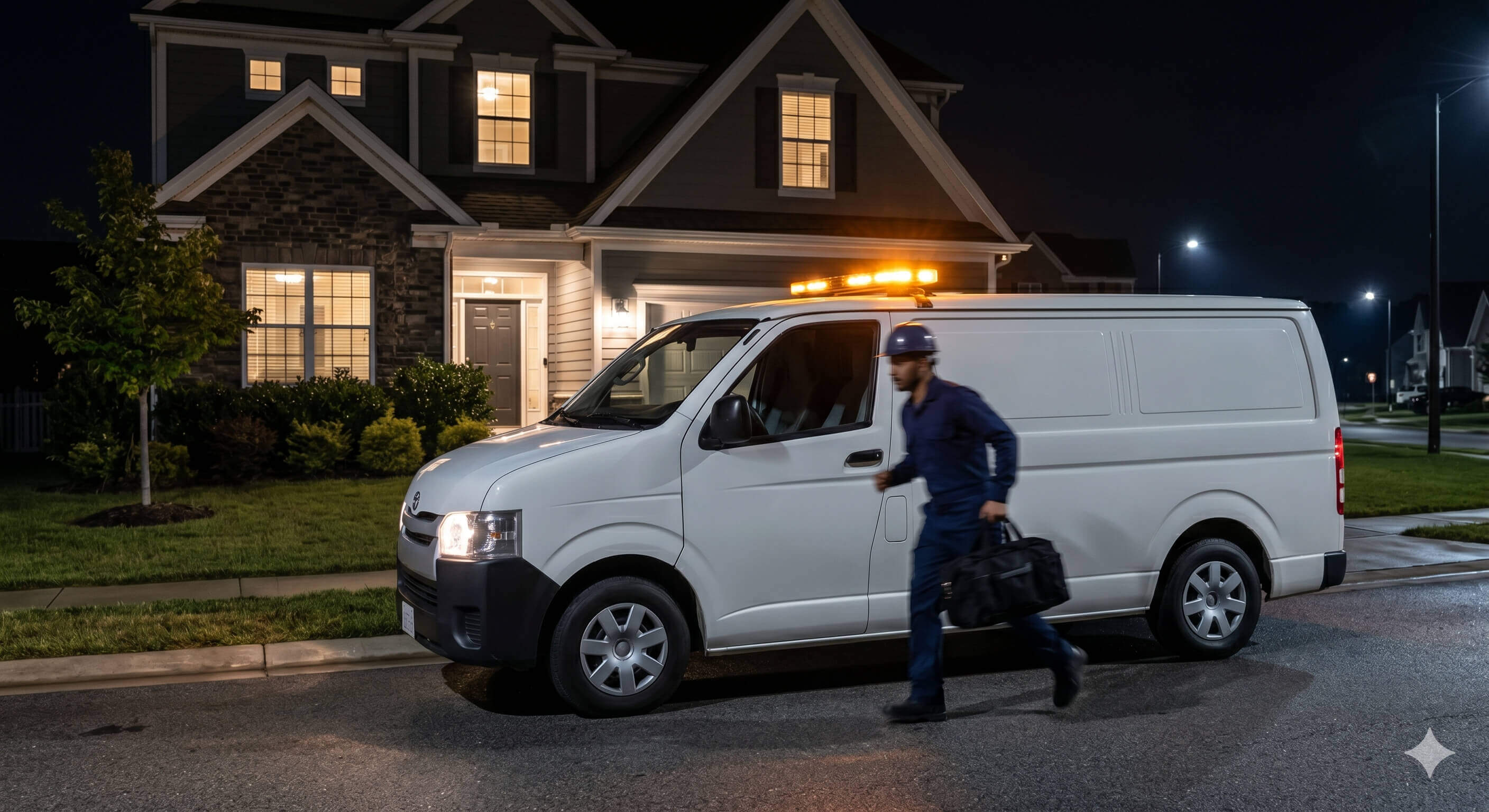
An AC failure in July in Khamis Mushait (42°C) or Jazan (40°C + 80% humidity) warrants organised, rapid action. This guide covers what to do from the moment of failure until the team arrives.
Step 1 — Identify the Type of Failure
- Completely dead (no light, no sound) — electrical or power supply issue
- Running but not cooling — gas, compressor or frozen coil
- Running with burning smell — switch off immediately at the main breaker, electrical emergency
If Completely Dead — Quick Self-Check
- Check the electrical panel — is the AC breaker tripped? Reset once only. If it trips again, do not reset.
- Try fresh batteries in the remote
- Try the direct buttons on the indoor unit
If Running Without Cooling
The coil may be frozen. In that case:
- Switch the AC off from the remote for 45 minutes to allow natural defrost
- Place towels under the indoor unit to catch thaw water
- After 45 minutes restart. If it cools then stops again after 15–20 minutes — low refrigerant, call us
How to Cool the House While Waiting
City Differences — What Works in Abha Won't Work in Jazan
Abha: open windows at night — mountain air can reach 15–18°C even in summer. Khamis Mushait and Jazan: do not open windows — outdoor air is hot or humid.
- Place a cold water jar (with ice) in front of a small electric fan — temporary cooling effect
- Close curtains on the sun-facing side during daytime
- Consolidate family into one room with a ceiling fan
- Reduce heat generation: no cooking, no large appliances
- Ensure adequate water intake especially for children and elderly
Related services
Frequently Asked Questions
Should I leave the AC running if it's not cooling?
No — switch it off to avoid stressing the compressor uselessly. If it's cooling slightly you can leave it at a higher set temperature to reduce the load.
Is an electric fan enough as a substitute in humid Jazan?
A fan helps with perceived cooling through sweat evaporation, but at 80% humidity the effect is weaker. Priority: avoid physical exertion and drink adequate water.
Can restarting the AC after it stops damage it?
The only risk is repeatedly resetting a tripping breaker. For normal shutdowns without electrical faults, waiting 5 minutes before restarting is sufficient.
What are the first three things to check?
The breaker in the panel; the batteries in the remote or thermostat; and the isolator switch near the outdoor unit. Those three resolve a meaningful share of call-outs without a visit at all.
Should I keep the AC running until you arrive?
No, in specific cases: if it's tripping the breaker, if you smell burning, if you see ice on the pipes, or if you know the charge is low. Running it then turns a simple repair into a compressor replacement.
How do I keep the house bearable until it's fixed?
Close curtains on sun-facing windows, run fans to move air (a fan doesn't cool, but it improves how the heat feels), avoid cooking at peak hours, and move to the rooms least exposed to sun. Look after children and elderly people first.
When is a breakdown a genuine emergency?
When there are infants, elderly people or anyone unwell in the home at peak heat. And with any burning smell or breaker tripping — that's safety, not comfort. Call immediately and say so.
Why does the AC always fail on the hottest day?
It isn't coincidence. The hottest day is when the system runs at maximum load — and any existing weakness (a dirty coil, a low charge, a tired capacitor) reveals itself under maximum load. The failure had been building for weeks; the hot day merely exposed it.
Could a maintenance contract have prevented this?
Most of the failures we're called to at peak summer were detectable weeks earlier with a simple check of pressures and current draw. Maintenance doesn't prevent every fault — but it converts most of them from an August emergency into a scheduled May repair.