
🛡️ 90-day warranty on parts
|
✅ Genuine OEM parts
|
🔧 8+ years serving the region
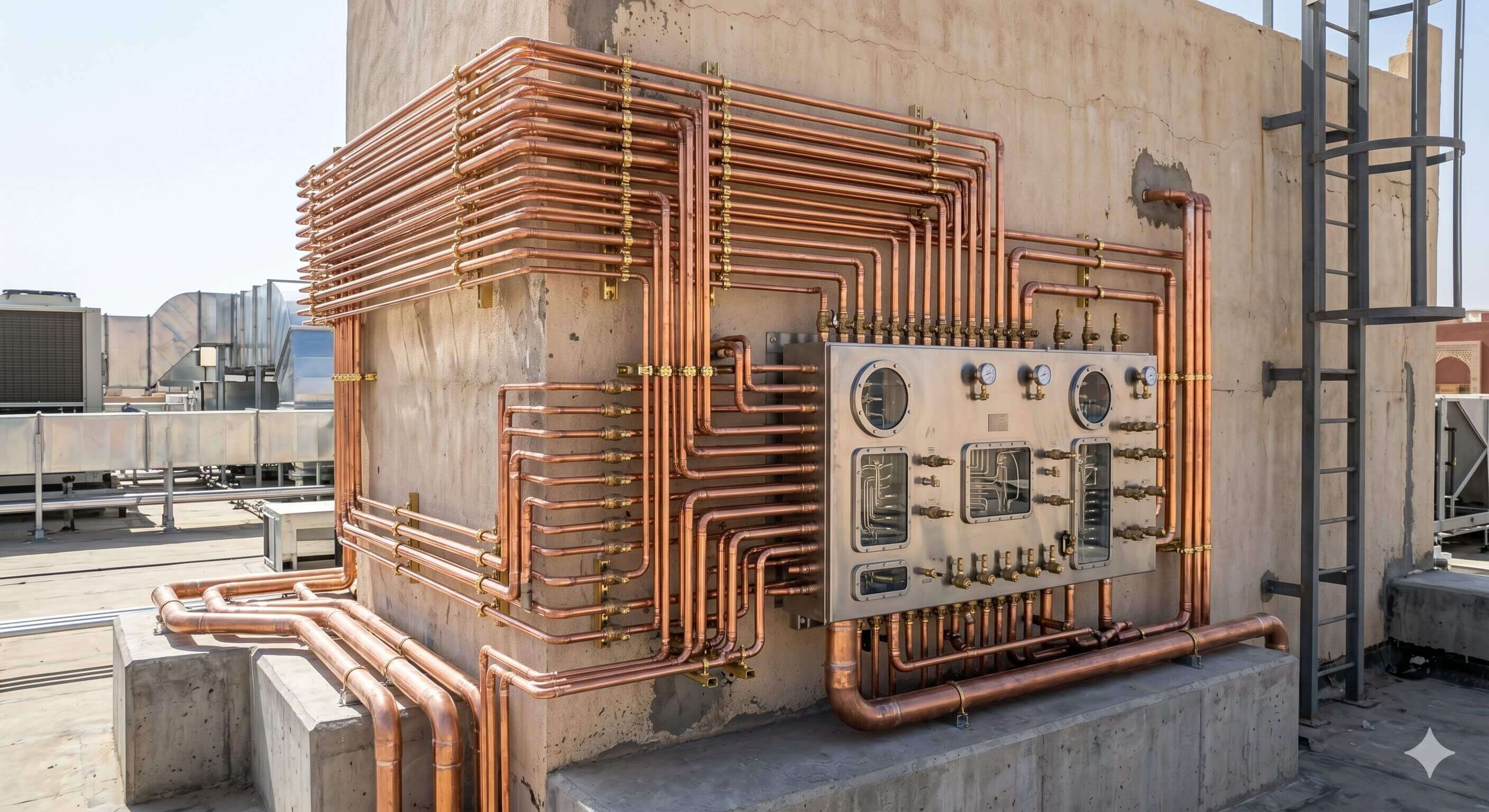
VRF (Variable Refrigerant Flow) systems allow cooling of multiple zones with multiple indoor units from a single outdoor condenser, with independent temperature control per zone. Ideal for hotels, hospitals, and large offices.
VRF at Altitude — Abha Needs Special Design
VRF systems are engineered to sea-level pressure specifications. At 2,200m in Abha, permitted pipe run lengths and maximum elevation differences between units change. We design every Abha VRF system with an altitude specification review with the manufacturer before installation.
When to Choose VRF Over Other Options
- Building over 5 floors or exceeding 2,000 sqm
- Independent temperature control required per room or zone
- Hotel or hospital requiring 24/7 continuous cooling
- Limited plant room space (VRF does not need a large equipment room)
- Targeting 30–40% electricity savings over conventional systems
Frequently Asked Questions
What is the difference between VRF and VRV?
VRV is Daikin's registered trademark; VRF is the generic term for the same technology. Practically they mean the same thing.
Do you service VRF systems from all brands?
Yes — Daikin, Mitsubishi, LG, Samsung, Gree and others. We have brand-specific diagnostic tools.
How long does VRF installation take for a mid-size commercial building?
2–4 weeks depending on building size, unit count, and pipe routing. We provide a detailed project plan with the quote.
What is a VRF system and who is it for?
A system that varies refrigerant flow, feeding multiple indoor units from a single outdoor unit and giving each zone independent control. It suits hotels, offices and multi-zone buildings where the load differs from room to room.
How is VRF different from a multi-split?
A multi-split runs its indoor units together at near-fixed capacity. VRF modulates refrigerant flow to each unit according to its actual load, moment by moment, and can recover heat between zones. The difference in control and efficiency is significant across many zones.
Is VRF genuinely cheaper to run?
In buildings with varying loads, clearly yes. The saving comes from running the compressor at part capacity rather than cycling fully on and off. In a single space with a constant load the difference narrows and may not justify the cost premium.
What's the biggest mistake in VRF installation?
Errors in pipe lengths, height differences and charge calculation. VRF is far less forgiving than a standard split; a charge error or a badly distributed branch shows up as poor performance that's hard to diagnose later. Correct design before installation is half the job.
Do you service VRF systems in the Asir region?
Yes — and you'll rarely find that locally. Most providers in the region work on residential splits only, and teams are brought in from Riyadh or Jeddah for commercial systems. We service VRF locally.
How do you diagnose VRF faults?
By reading the error codes from the controller first, then verifying them against actual measured pressures and temperatures across the branches. Relying on the error code alone is misleading — the code tells you the symptom, not the cause.