Air Purification Systems in Abha, Khamis Mushait & Jazan
Professional service specialised for Asir and Jazan climates
✓ Abha, Khamis Mushait & Jazan✓ 24/7 Emergency
Indoor air quality is a real issue in regional homes and offices — but solutions differ by city and specific problem. What works for Abha's dust differs from what works for Jazan's humidity.
Abha — Seasonal Fine Dust
Abha's spring dust carries PM2.5 particles (below 2.5 microns) that pass through standard filters and enter the lungs. Asthma and dust allergy sufferers notice significant worsening in April–May. A HEPA filter rated H13 captures 99.97% of these particles.
Jazan — Coastal Humidity and Bacteria
In Jazan, the larger problem is mould and bacteria driven by humidity, not dust. UV-C lamps installed inside the AC unit or in the airstream continuously sterilise passing air — reducing the need for frequent manual disinfection.
Air Purification System Options
1. HEPA Filter Added to Existing AC
Some AC units accept an additional HEPA filter stage in the indoor air path. The simplest and most affordable solution. Requires replacement every 6–12 months depending on the city's pollution level.
2. Standalone Air Purifiers
Independent units with HEPA + activated carbon filter. Suitable for large rooms or severe allergy sufferers. Operate independently from the AC.
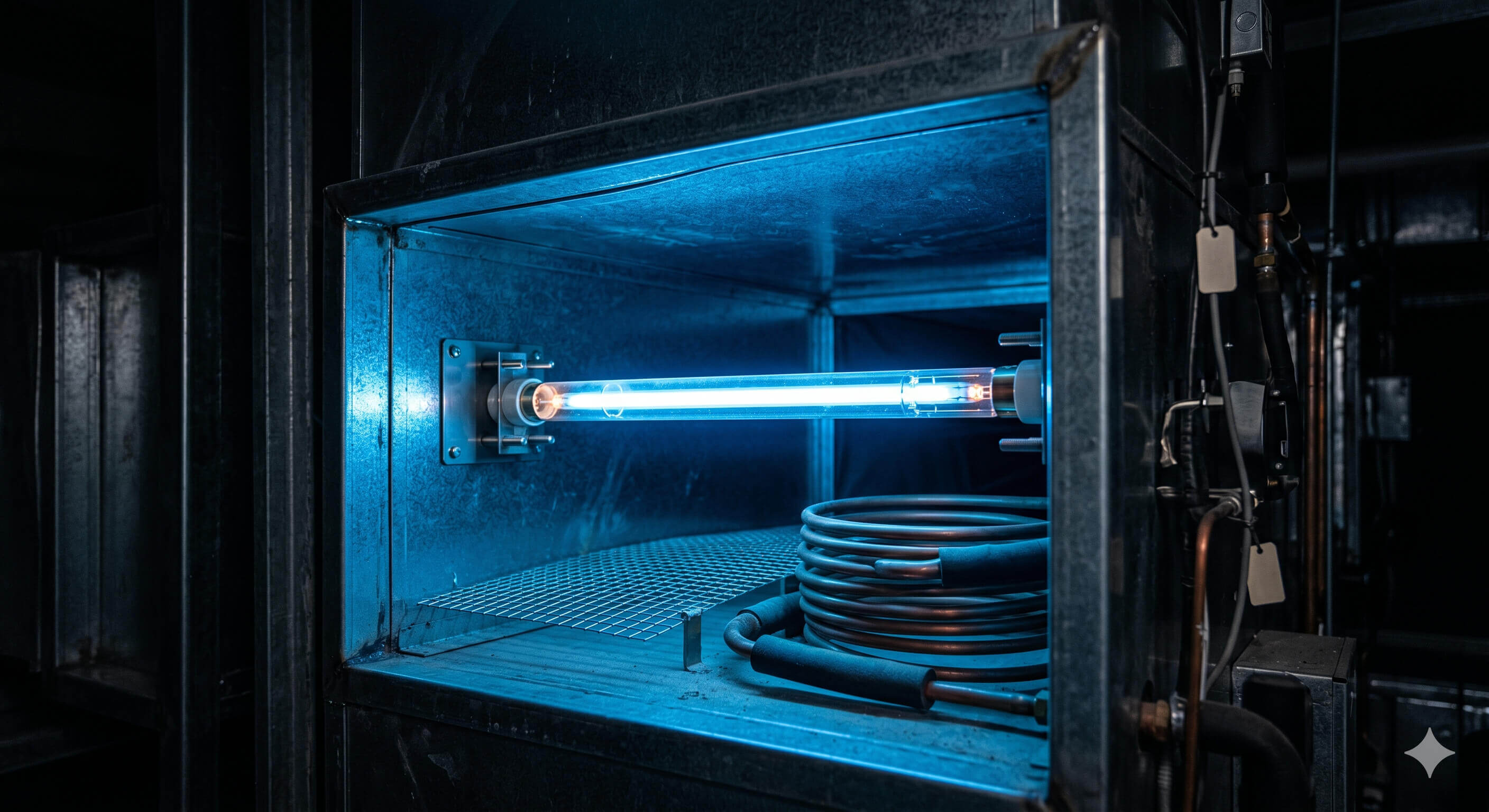
3. UV-C Lamps Inside the AC
Mounted near the evaporator coil, running continuously during AC operation. Destroy bacteria, fungi and viruses on the coil surface. Best for Jazan where microorganisms grow rapidly on the constantly damp coil.
4. Whole-House Central Purification
A purification unit installed in the main airstream of a central AC system treats air for all rooms simultaneously. Higher cost but most comprehensive coverage for villa owners.
Filter Replacement Schedule by City
HEPA filter in Abha: every 6 months during dust season, every 12 months in winter
Carbon filter in Jazan: every 4–6 months (humidity saturates it faster)
UV-C lamp: replace every 12–18 months (gradually loses effectiveness)
Frequently Asked Questions
Do HEPA filters fit all AC types?
No — HEPA requires relatively low airflow for effective filtration. Some AC units accept a HEPA stage; others cannot. We inspect the unit before installation to confirm compatibility.
Can a UV-C lamp be added to an existing AC?
Yes in most split units — the lamp is mounted near the evaporator coil with a small internal power connection. It operates automatically with the AC.
What is the difference between UV-C and Titanium Dioxide (Photocatalytic) purification?
UV-C destroys microorganisms directly through radiation. Titanium dioxide breaks down organic pollutants when activated by UV. UV-C is better scientifically established and easier to evaluate.
Are air purification systems worth installing here?
It depends on your problem. For allergy or asthma sufferers, or homes near dust sources, the benefit is real. But it is not a substitute for cleaning the AC and the ducts — purifying air while the coil is mouldy treats the symptom.
Is upgrading the filter enough on its own?
Sometimes, but with care. A higher-grade filter means higher resistance to airflow. Fitting one into a system not designed for it raises static pressure, chokes airflow and strains the blower. We verify the system's capability before upgrading.
What's the difference between purification and disinfection?
Purification continuously treats the air moving through the system. Disinfection is a procedure applied to the unit's own surfaces — the coil and drain pan — to eliminate existing biological growth. The first is ongoing and preventive; the second is corrective.
Is a portable purifier a substitute for an integrated system?
It works for a single room, and it's a reasonable but limited option. A portable unit treats the air around it and does nothing for the rest of the house. An integrated system treats all the air passing through the AC — broader coverage at a higher cost.
Are UV lights inside the system effective?
They work on the coil and drain pan surfaces where organisms actually grow, which is their logical use in our humid climate. But they are not a magic fix for air moving quickly through the system, and they don't replace mechanical cleaning.
What should I do before considering purification?
Clean what you already have. An AC with a mouldy coil and a stagnant pan is distributing contaminants through the house — bolting a purifier on top treats the symptom. Clean the source first, then decide whether you still need purification.
Does your AC need attention?
Call us now for a free assessment and instant quote