
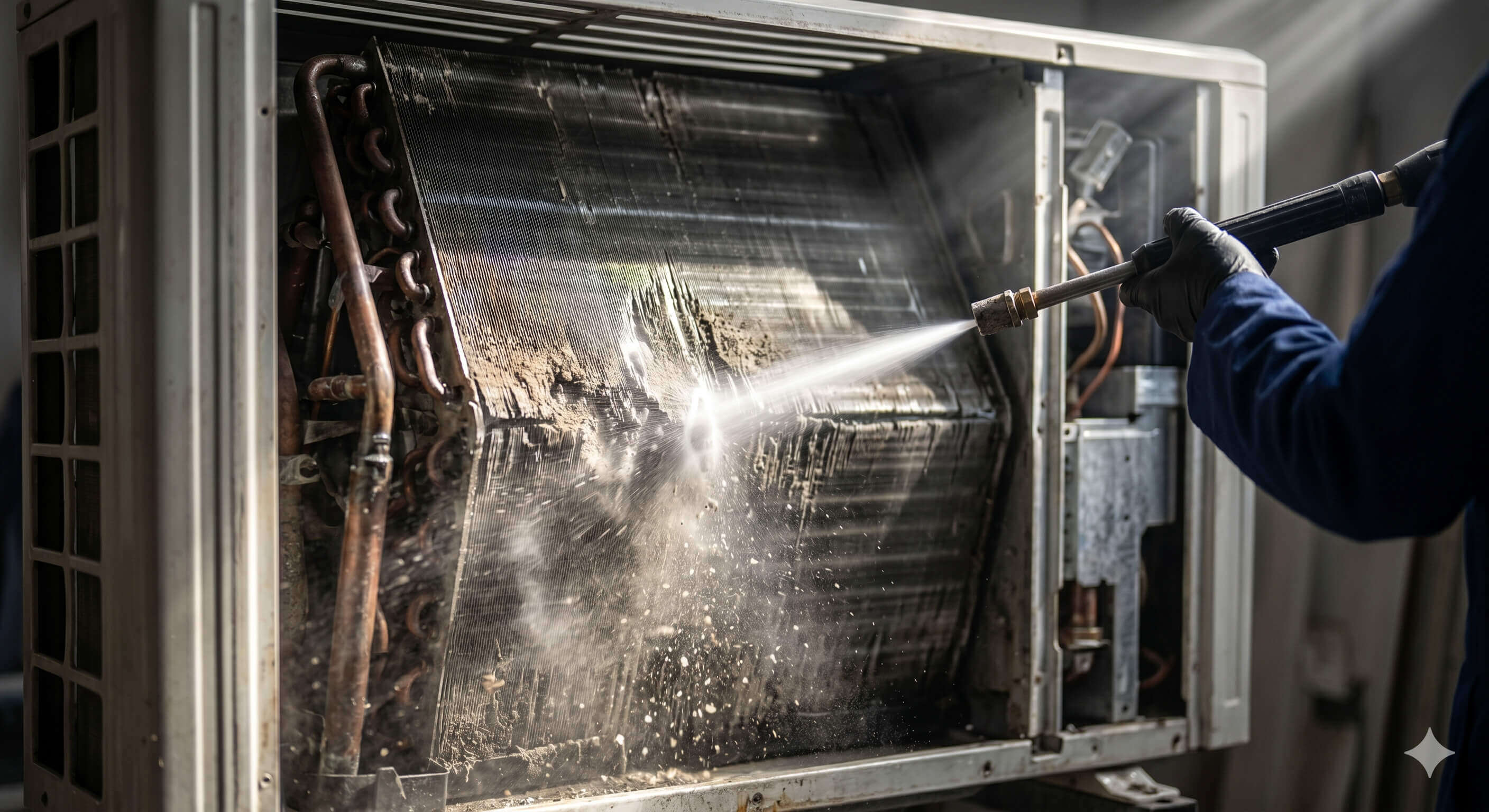
Mould in an AC is not just an odour — it is live microbes circulating in your indoor air. Children, the elderly, and allergy sufferers are most affected.
Why Jazan Needs More Frequent Disinfection
At 80%+ relative humidity in Jazan summer, room air passing over the cold evaporator coil continuously deposits a moisture layer. This layer — adjacent to warmth and metal surfaces — is ideal for mould. Jazan units need disinfection 3 times per year compared to twice in Abha.
The Full Disinfection Process
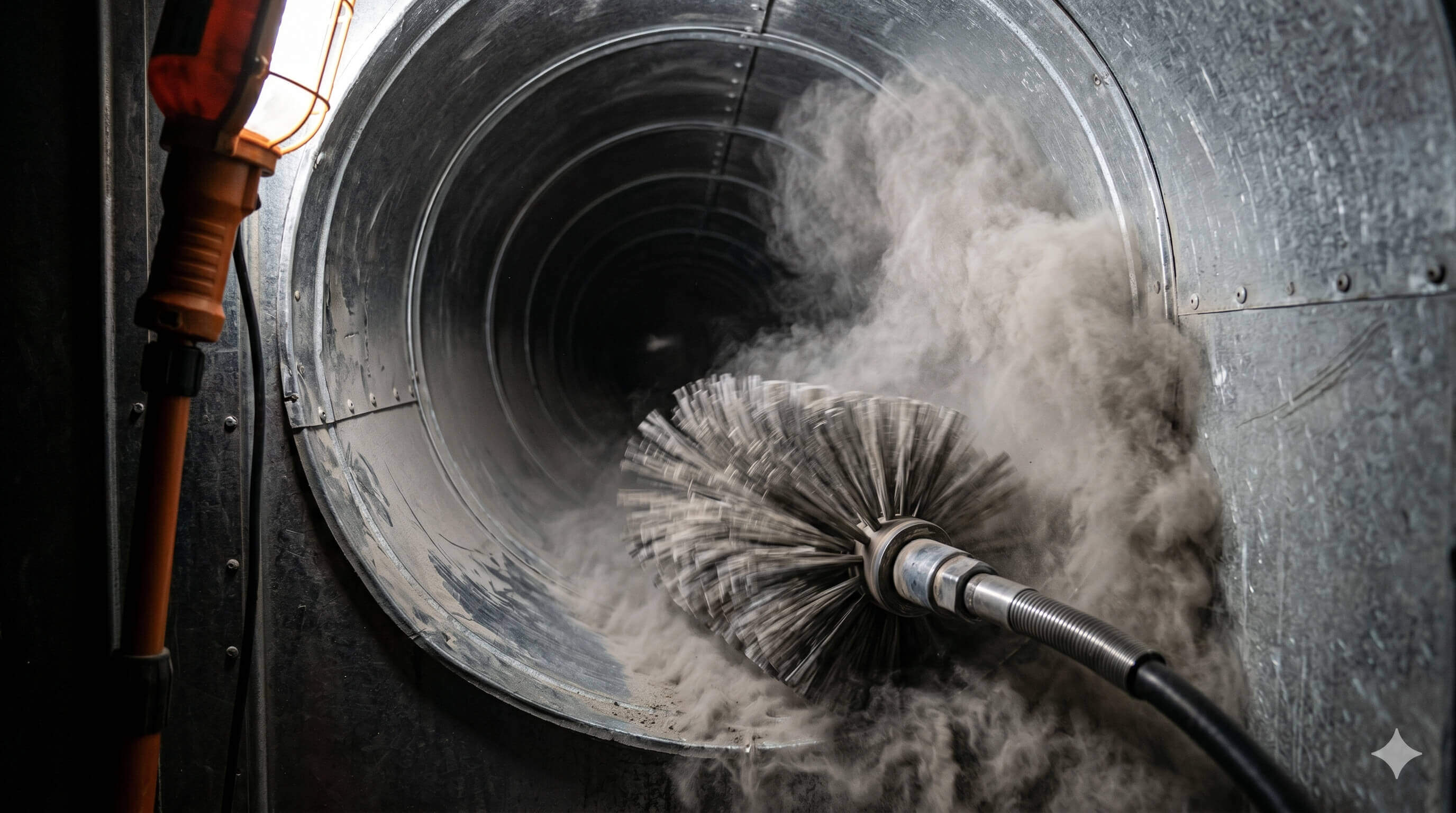
- Clean filters and remove visible debris
- Apply anti-fungal and anti-bacterial agent to indoor coil
- Treat condensate tray with anti-algae solution
- Disinfect air vents internally
- UV lamp treatment where system supports it
- Allow treatment to act, then flush with clean water
- Run test to confirm odour elimination
Frequently Asked Questions
Are the disinfection products safe for children and pets?
Yes — we use products certified for residential use, non-toxic after drying. We disinfect with windows open and wait 30 minutes before restarting the unit.
Does disinfection permanently eliminate the AC smell?
In most cases yes. If mould buildup is severe, an additional cleaning session may be needed. We provide a result guarantee.
Can mould be prevented going forward?
Yes — running the AC on 'Fan Only' mode for 15 minutes after switching off cooling dries the coil and prevents mould growth. This simple habit significantly reduces how often disinfection is needed.
What's the difference between cleaning and disinfecting an AC?
Cleaning removes what you can see — dust and dirt on the filter and coil. Disinfection treats what you can't: bacteria, fungi and biofilm on the coil surface and inside the drain pan. A visually clean AC can still be a source of odour and microbial growth.
When do I need disinfection rather than just a clean?
When a musty smell returns after cleaning; when there are allergy or asthma sufferers in the home; after a long idle period in a humid environment; and in Jazan and Abha, where humidity makes biological growth the primary problem rather than dust.
Are the products safe around children?
We use products formulated for residential air conditioning systems, not generic disinfectants, and we ventilate the space after treatment before running the unit. Tell us in advance if there are infants, respiratory patients or pets in the home so we can select the appropriate treatment.
How long does disinfection last?
It depends on the environment and humidity. In a humid climate like Jazan, growth returns faster — especially if the drain line remains a problem. Disinfecting without addressing the source of the moisture, a stagnant pan or a blocked line, is by nature temporary.
Do air conditioners really cause respiratory problems?
A healthy, clean AC does not cause illness; it can improve air quality by filtering. But an AC with a mouldy coil and a stagnant drain pan distributes spores and microbes into the air you breathe. The problem isn't air conditioning — it's neglected air conditioning.
Will disinfection remove the smell permanently?
It will if the source is treated. The common mistake is disinfecting the coil alone and leaving the drain pan and line — which are the most frequent source of odour in our climate. Then the smell returns within a week.