Commercial AMC Contracts in Abha, Khamis Mushait & Jazan
Businesses and institutions need documented maintenance agreements with clear service levels — not verbal promises. Our commercial contracts specify everything precisely.
🛡️ 90-day warranty on parts|✅ Genuine OEM parts|🔧 8+ years serving the region
A commercial AMC differs from a home contract in the level of commitment and reliability required. A hospital with failed cooling faces medical and legal consequences. A hotel with failed AC loses guests. Our commercial contracts are engineered for this level of seriousness.
Government Buildings in Abha — Special Requirements
Government buildings in Abha and Khamis Mushait typically require official vendor registration and procurement documentation. We hold all required commercial licences for government entity work and provide official tax invoices and completion certificates.
Commercial AMC Contract Components
Scheduled annual preventive maintenance calendar
SLA: emergency response time (2–4 hours for high-priority)
Detailed report after every visit + comprehensive annual report
Dedicated account manager (single point of contact)
25% discount on spare parts
Option to extend across office networks or branches in all three cities
A commercial contract is not a residential one at a larger scale
The difference isn't the number of units — it's the cost of downtime. At home, a failed AC is an inconvenience you can survive for a day. In a hotel, a clinic or a restaurant, it stops business: guests leave, appointments are cancelled, a dining room empties. The cost is measured by the hour, not by the spare part.
So a serious commercial contract rests on three things that don't exist in a residential one: a written response time, a binding preventive schedule, and a documented record per unit.
What any commercial contract must contain — or it's a promise, not a contract
A response time stated as a number. "We'll come quickly" is not a clause. A contract that states no time commits nobody to anything.
A preventive visit schedule built around the city's season, not around the date you signed.
An independent record for each unit: its age, its pressures, its current draw, its fault history. That record is the prediction tool.
A report after every visit documenting the actual readings, what was done, and what is expected to need attention next season — which is what lets your management budget instead of waiting to be surprised.
Genuine emergency priority over non-contracted customers.
Every type of premises has a different need
Hotels: the guest experience is the product. A hot room means a negative review that lasts for years. Scheduling happens outside occupancy hours, and the response has to be immediate.
Hospitals and clinics: air quality and pressure relationships between rooms aren't comfort, they're a requirement. Air handlers and filters need a stricter schedule, and chillers need redundancy designed in.
Restaurants: the equation is pressure balance. Powerful kitchen extraction without designed make-up air pulls odours and smoke from the dining room into the kitchen — or the reverse.
Offices: uneven temperature between zones is the perennial complaint, and the answer is zoning, not turning the temperature down further. And a server room is its own system, running around the clock regardless of office hours.
Mixed brands and mixed ages — and that's normal
Most existing buildings contain a mixture: splits and cassettes, perhaps a central or VRF system, from different brands, installed in different years. Being an independent workshop rather than a brand's agent means you deal with one provider for all your units, under a single unified service record — instead of separate contracts with several agents, each with a different response time.
The systems nobody services locally
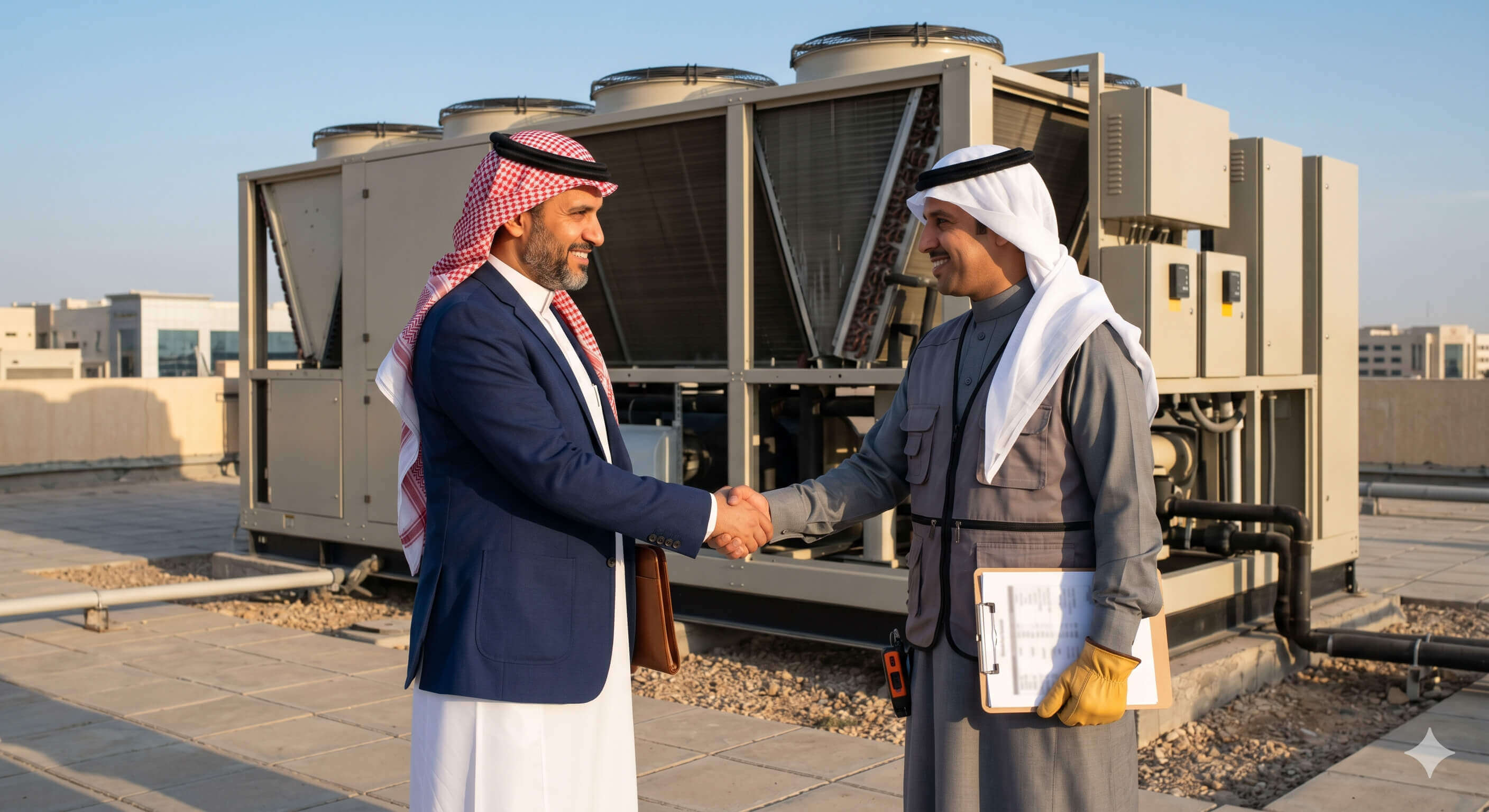
Chillers, air handling units and VRF systems: most facilities in the Asir and Jazan regions bring teams in from Riyadh or Jeddah for these. In practice, a Thursday failure can mean downtime until Sunday. We service these systems locally — and in a facility whose downtime is costed by the hour, that difference alone is the contract.
Frequently Asked Questions
What is the minimum contract size?
We start from 5 units or more. For small businesses with 2–4 units, our premium home contract is more appropriate.
Do you offer fixed-price or itemised contracts?
Both: a fixed annual value covering everything, or a base contract at a competitive price with separate invoices for major parts.
Do you work with government entities?
Yes — we hold the required commercial registration and licences. We issue official tax invoices and completion certificates for government contracts.
Why does a commercial contract need different terms from residential?
Because the real cost of a failure is different. At home, a broken AC is an inconvenience. In a hotel, clinic or restaurant, it stops business and costs revenue and reputation. So a commercial contract is built on a guaranteed response time and preventive scheduling, not a seasonal visit.
What should any serious commercial contract include?
A written, specified response time; a preventive visit schedule; a record for each individual unit; a report after every visit documenting the readings; and priority in emergencies. A contract that doesn't state a response time isn't a contract — it's a promise.
Do you cover hotels, hospitals and restaurants?
Yes, and each has a different need. Hotels are sensitive to guest experience. Hospitals are sensitive to air quality and pressure relationships between rooms. Restaurants need a focus on kitchen extraction and pressure balance. One contract does not fit all.
How does a contract reduce total cost?
Three ways: higher efficiency means less electricity every month; early detection means a part repaired rather than a system replaced; and less downtime means revenue preserved. In commercial premises the third is usually larger than the first two combined.
Our units are different brands and different ages. Is that a problem?
No, and it's the normal situation in existing buildings. We're an independent workshop working across most brands, so you aren't forced into multiple contracts with different agents. We build one unified record per unit regardless of its badge.
Do you provide reports to management?
Yes. Every visit is documented with the actual readings — pressures, current draw, filter and coil condition — plus what was done and what is expected to need attention next. That documentation is what lets you budget instead of being surprised by emergencies.
What Sets a Commercial AMC Apart from a Residential Contract
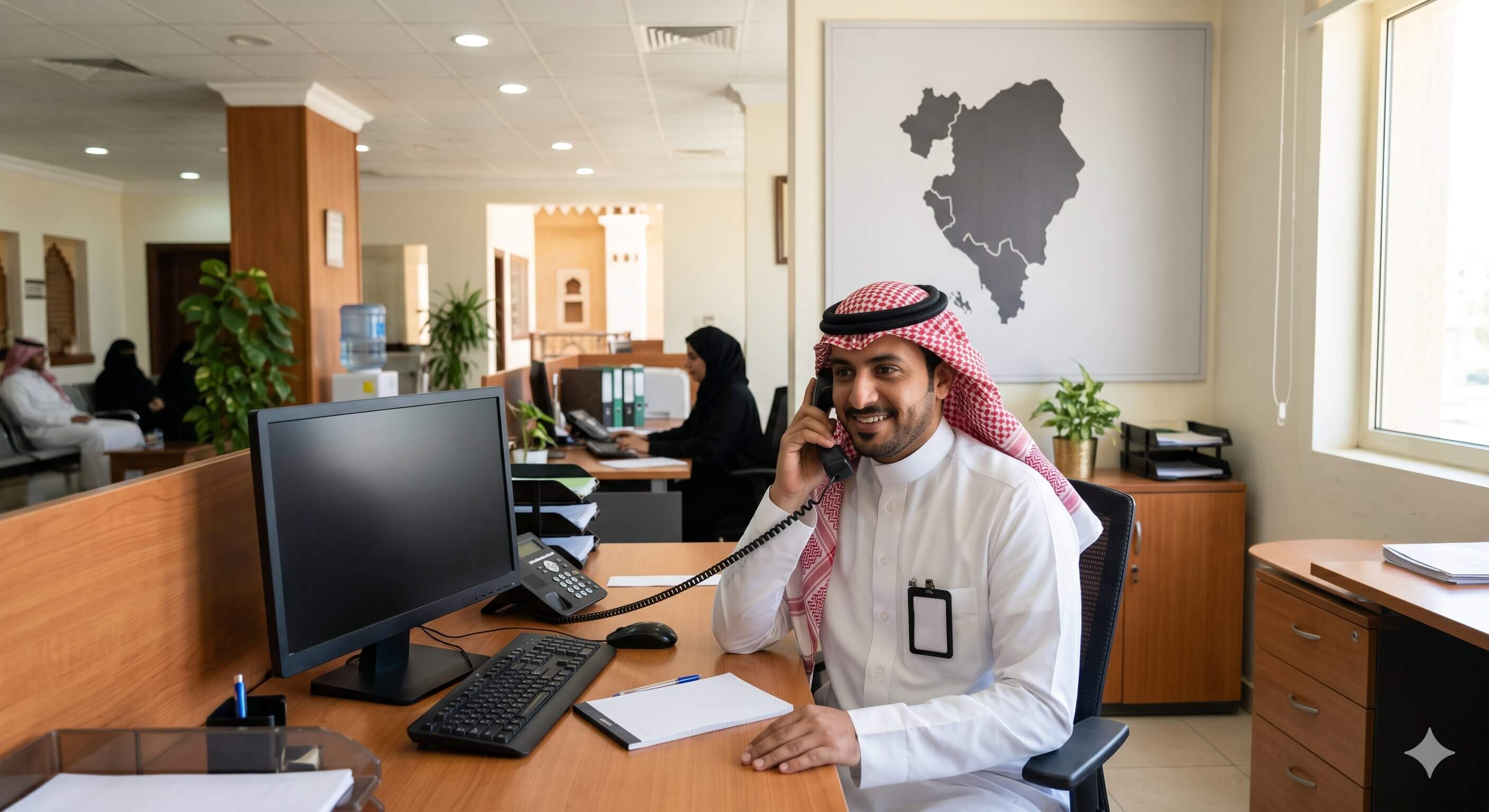
A residential maintenance contract is built around convenience and savings. A commercial AMC is built around continuity and legal accountability. A hotel with no cooling for four hours in a Jazan summer loses bookings. A hospital operating theatre without temperature control faces a different category of consequences entirely. Commercial facilities cannot tolerate "we'll come tomorrow." Our commercial contracts specify exactly: how quickly we respond in an emergency, what happens if we are late, and which account manager answers your call at any hour.
Service Level Tiers Available
Standard tier suits offices and ordinary retail units: 4-hour emergency response, two preventive visits per year, 15% discount on parts, written report after each visit. Premium tier is for hotels, hospitals and large commercial centres: 2-hour response, four preventive visits, a dedicated account manager, 25% parts discount, and a quarterly review meeting covering system performance trends. Critical tier for facilities where cooling cannot be interrupted: 1-hour response, an on-call technician around the clock, a reserved spare-parts inventory assigned to your account, and monthly detailed condition reports for every unit.
Documentation and Compliance for Official Bodies
Healthcare, educational and government facilities in Abha, Khamis Mushait and Jazan frequently require vendor accreditation documents and official maintenance records for inspection and licensing purposes. Every commercial contract includes: a digital maintenance log with full archiving, signed completion certificates for each visit, and a comprehensive annual report on all systems valid for official documentation purposes. Our invoices are VAT-registered on the Fatoorah platform and we hold all commercial licences required to work with government and private sector clients across the region.
Multi-City Coverage Under a Single Contract
Many businesses operate across Abha and Khamis Mushait, or extend to Jazan. Rather than three separate contracts with three different suppliers, our unified contract covers all your branches across the region under consistent terms, unified reporting, and a single invoice. The team in each city accesses your equipment specifications and maintenance history from the same central system — no repetition, no gaps in institutional knowledge.
Does your AC need attention?
Call us now for a free assessment and instant quote