
How this page differs: This page covers air-duct cleaning from a health and indoor-air-quality perspective — contamination, bacteria, mould and duct odour. If you need duct installation or repair from a mechanical and airflow perspective, the Ventilation & Ductwork page is the better fit.
Ductwork is the 'lungs' of your central system — every breath of air passes through it. Regular cleaning is not just an environmental nicety; it is essential for system efficiency and family health.
Abha Dust in Ductwork
Dust storms in Abha push large volumes of fine particles into the system over short periods. These particles accumulate in duct bends and at register outlets. Inspecting and cleaning ducts after the spring dust season every year is a practice we recommend to every Abha client.
Signs You Need Duct Cleaning Now
- Dusty or musty smell when the central system runs
- Allergy or asthma sufferers in the household have worsening symptoms indoors
- Unusual dust accumulation on furniture despite daily cleaning
- Visibly dirty or obstructed air registers
- Weak airflow in some rooms despite the unit running normally
Frequently Asked Questions
How long does duct cleaning take for an average home?
3–6 hours for an average home with 6–10 air registers. Large buildings may take a full day.
Is duct cleaning messy or disruptive?
We use negative-pressure suction equipment — dirt is pulled outward, not scattered inside the home. Disruption is minimal.
How often should ducts be cleaned?
Every 3–5 years in standard conditions. In Abha (seasonal dust) and Jazan (coastal humidity): every 2–3 years.
How do I know my ducts need cleaning?
Practical signs: dust settling on vents quickly after you wipe them; a dusty or musty smell when the AC starts that then fades; allergies or sneezing that worsen indoors and ease outdoors; and noticeably uneven cooling between rooms.
What's the difference between duct cleaning and AC cleaning?
AC cleaning treats the unit itself — coil, filter, drain pan. Duct cleaning treats the distribution network the air travels through to reach your rooms. A clean AC pushing air through a contaminated duct will still distribute that contamination.
Does duct cleaning actually help with allergies?
It helps when the ducts genuinely are the source — accumulated dust, mould, or insect debris. It is not a cure for all allergies. We inspect first; if the ducts are clean we won't sell you a service you don't need, and a higher-grade filter may be the real answer.
Can mould grow inside ducts in this region?
In Abha and Jazan, clearly yes. Abha because of its seasonal humidity, Jazan because of its constant coastal humidity. Mould needs moisture and organic material — and dust settled in a damp duct provides both. In drier Khamis Mushait, dust dominates rather than mould.
How do you clean the ducts?
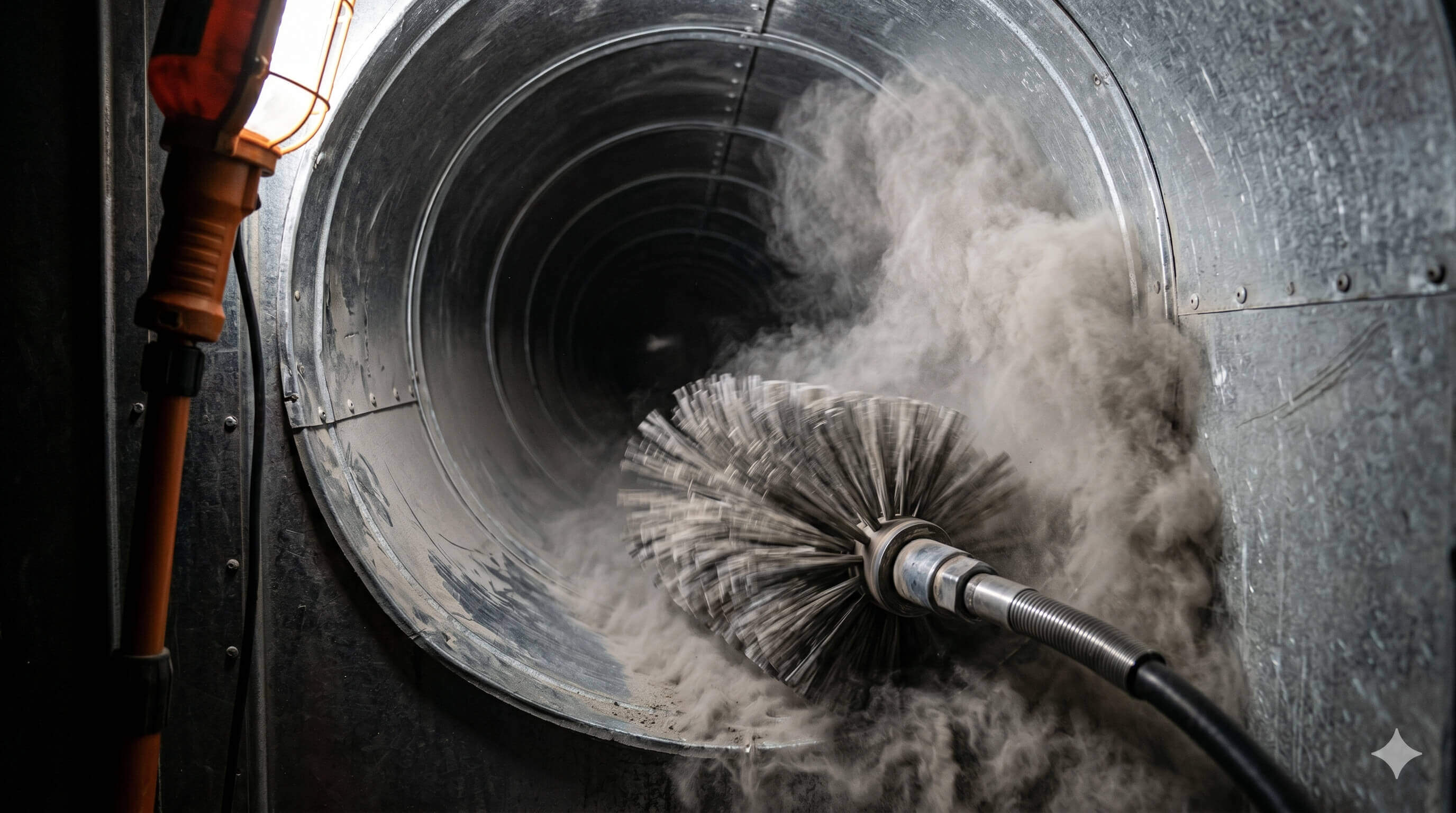
With rotating mechanical brushes that dislodge adhered debris, combined with negative-pressure extraction that pulls it out rather than spreading it through the house. Suction alone won't shift adhered dirt. Where mould is present, we add disinfection after the mechanical clean.