Pre-Summer AC Service in Khamis Mushait — The Right Time and the Right Checks
April is the ideal month for Khamis Mushait AC maintenance. Learn exactly what needs checking to avoid July and August breakdowns.
📂 Khamis Mushait⏱ 5 min read
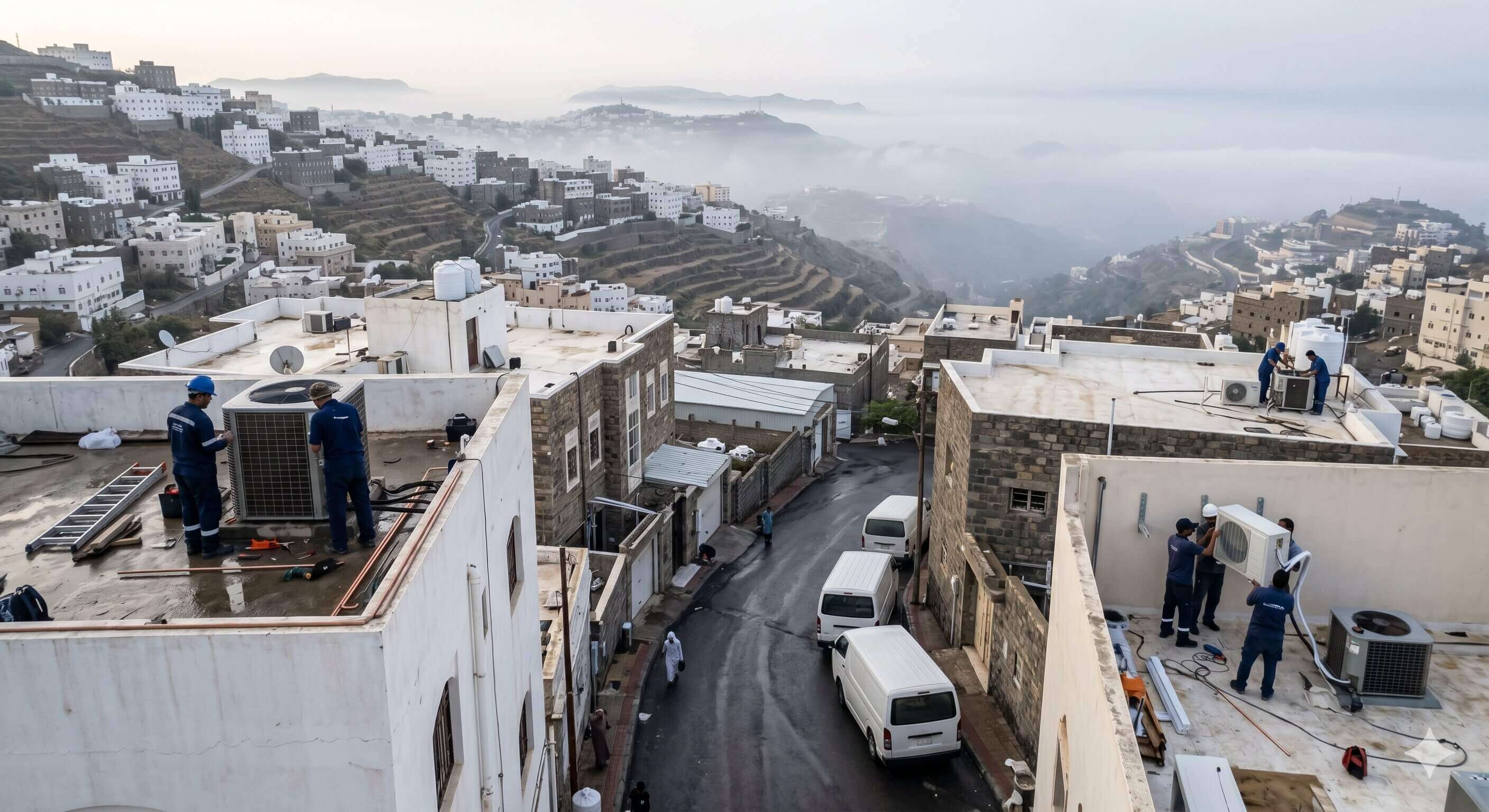
Khamis Mushait experiences the harshest summer in Asir and Jazan. July and August temperatures regularly exceed 42°C and AC units run 12–16 hours daily without rest. This summer exposes faults in units that appeared fine all winter.
Why April and Not May or June
June has high demand — longer waits and higher emergency rates
April allows discovering and fixing any fault before 42°C arrives
Better pricing compared to summer emergency requests
Gas level verified before a shortfall becomes critical in peak heat
The Khamis Mushait Specific Checklist
1. The Capacitor — Top Priority
The capacitor is the component most vulnerable to failure in Khamis Mushait summer. 60–70% of summer faults start with a tired capacitor. Measuring its electrical capacitance value reveals early degradation before it fails completely in July.
2. Refrigerant Level
In winter, low refrigerant has minimal impact. In July at 42°C, the same shortfall means an AC that can't cool and runs continuously. Testing and topping up in April prevents worst-case summer scenarios.
3. Outdoor Condenser Coil Cleaning
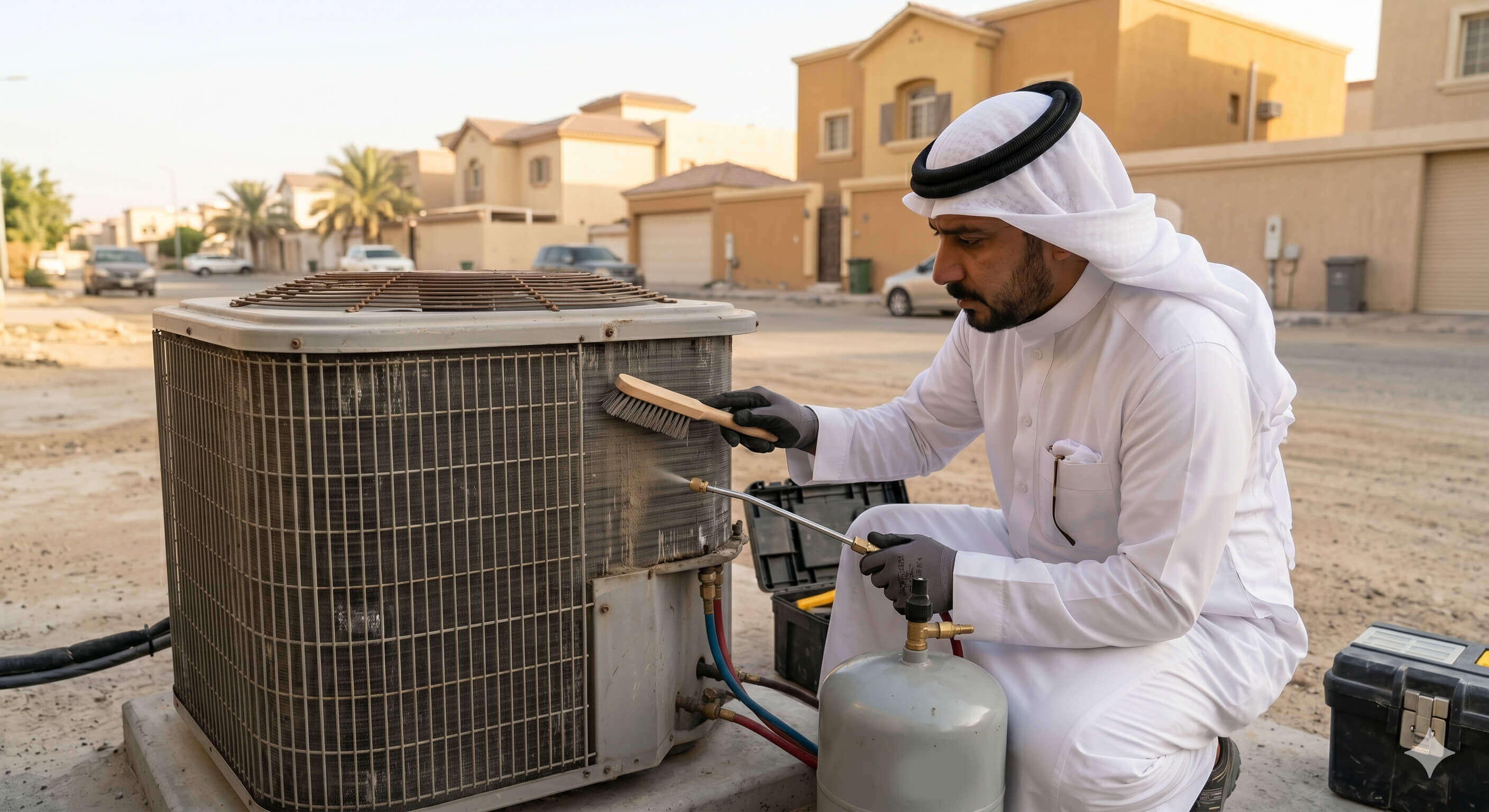
A fouled coil makes the compressor work against elevated condensing pressure — accelerating its wear in extreme heat. Medium-pressure water cleaning restores most of the unit's performance.
4. Electrical Connection Check
Oxidised terminals create resistance that increases further at high temperatures. In July and August, this resistance heats connections and may cause shorts or fire.
5. Compressor Temperature Under Load
After 20–30 minutes of operation, measuring compressor temperature with a temperature gun confirms it is running within its safe range. A hot-running compressor in April will be a real problem in July.
Real Case — Al-Andalus District, Khamis Mushait
Last summer, a main bedroom AC failed at 2pm with outdoor temperature at 41°C. Fault: burnt capacitor. We carried the correct replacement in our vehicle and swapped it in 35 minutes from arrival. The house was cool again before afternoon.
Can you tell if a capacitor is failing from the outside?
Not accurately. A capacitor may look fine externally while its electrical capacitance value has dropped 30–40% below its original rating. A Multimeter measurement determines its actual condition.
What does capacitor replacement cost in Khamis Mushait?
SAR 150–350 depending on size and voltage rating — one of the fastest and most affordable AC repairs.
Is cleaning the filters alone enough as annual maintenance in Khamis Mushait?
No — proper annual maintenance in Khamis Mushait includes capacitor inspection, gas level check, and outdoor coil cleaning at minimum.
When exactly should I schedule seasonal maintenance?
May. Before the continuous-run season starts, not after. Servicing in August comes after the compressor has already run for weeks at elevated discharge pressure — and after the bill has already climbed.
Can dust alone actually break an AC?
Not directly — it raises discharge pressure gradually until the compressor trips on thermal overload, or burns out. The failure happens in August, but its cause was dust accumulating in May.
Why does my unit get dirtier than my neighbour's?
Location. Units facing unpaved ground or construction sites collect dust far faster. And rooftop units take a double load: wind-blown dust plus heat radiating back off the roof deck.
Can I wash the outdoor unit myself?
Hosing it from the outside drives dust deeper into the fin pack. A correct wash goes from the inside out, against the direction the dust entered, and includes combing the bent fins — which a garden hose cannot do.
How often should I change the filter in dust season?
Clearly more often than usual. At peak dust we recommend doubling the normal frequency. The filter is the cheapest component in the whole system and the one with the greatest effect on airflow and consumption.
Does seasonal maintenance genuinely save money?
Yes, in two ways: less electricity every month through the season, and prevention of the compressor failure that costs many times what maintenance does. Most compressor failures we see in Khamis Mushait were preventable.
Does your AC need attention?
Call us now for a free assessment and instant quote